Carbon fiber can deliver real stiffness at low weight in a gaming mouse or keyboard, but only when the material is a genuine structural part and the finished product's weight backs it up. A carbon-fiber label on a shell, plate, or frame that is mostly decorative won't give you that benefit. The right choice between carbon fiber, magnesium, and ABS depends on what's actually built and how much the complete device weighs, not the material name alone.
The short answer: carbon fiber is worth it only when the construction and weight are real
Consider carbon fiber when the listing names a structural composite component and the finished device is meaningfully lighter than the alternatives you're weighing. Choose magnesium when you want a rigid metal structure more than the lowest possible mass, and choose ABS when cost and adequate molded geometry matter more than a premium label.
None of these three materials wins outright. A carbon-fiber shell's stiffness-to-weight profile depends on the fiber layup, resin, and geometry used in that specific part, and a magnesium shell's rigidity depends on the alloy, wall thickness, and casting design, while an ABS shell can still perform well if it has enough wall thickness or internal ribs. For a custom wireless mouse, that means the two decisive checks before comparing price are simple: where exactly is the carbon fiber used, and what does the complete listed weight say? A lighter finished mouse can matter more if you make broad, repeated swipes, but shape, grip size, and sensor placement still control most of the feel.
What carbon fiber construction means in a mouse or keyboard
A carbon-fiber claim only tells you something useful once you know whether the material is structural or cosmetic. The distinction changes whether the stiffness or weight benefit you're paying for actually exists.
Composite construction is more than a weave pattern
Carbon fiber used in a mouse is typically a composite: layers of carbon fabric held together by a resin matrix, not a single uniform material like a metal. That matters because the composite is anisotropic, meaning its strength depends on the direction the fibers run, unlike magnesium, which is roughly uniform strength in all directions. A well-oriented layup can be very stiff along the load path it was designed for and much less stiff elsewhere, so two "carbon fiber" shells built with different layups can behave differently even with the same material name.
Structural part versus decorative finish
- Structural shell, plate, frame, or reinforcement. This is the location where fiber orientation and layup can realistically change flex and mass.
- Surface film, printed texture, or cosmetic panel. This creates the visual pattern of carbon fiber but doesn't add the same mechanical behavior.
- Incomplete listing. If a product doesn't say where the carbon fiber sits or how it's built, treat the stiffness or weight claim as unverified until you check further.
How rigidity and weight change handling and perceived responsiveness
Rigidity mainly changes how much a shell or plate flexes and how solid it feels, while weight changes how much effort it takes to move the device. Neither one, by itself, proves that a mouse or keyboard responds faster.

Rigidity changes support and flex
A shell or plate that resists bending can feel more solid under your hand and may support buttons or switches more consistently, since less material deformation gets absorbed before a click registers. But that result depends just as much on wall thickness, mounting points, and internal reinforcement as it does on the material itself. A thin, poorly ribbed carbon-fiber shell can still flex, and a well-ribbed ABS shell can feel surprisingly rigid.
Weight changes handling, not every performance specification
Lower complete-device mass reduces the effort needed to accelerate and stop a mouse, which is the main reason competitive players chase lighter builds. But balance is a separate variable: it depends on where the battery, sensor, and internal components sit inside the shell, not just the total weight. For a custom wireless mouse build, a lighter shell paired with a poorly placed battery can still feel back-heavy or nose-heavy, which is why total weight and mass distribution are worth checking together.
Keep responsiveness in its own lane
- Material and shell geometry can change perceived solidity or flex under pressure.
- Sensor latency, click latency, switch type, firmware, and shape/grip fit require their own separate evidence.
- Treat "responsiveness" from a material claim as a feel description, not a measured speed improvement.
Carbon fiber vs. magnesium vs. ABS
Each material trades stiffness, weight, and cost differently, and the right fit depends on what you value most in a mouse or keyboard build. The table below summarizes the tradeoff; the details after it explain what to verify for each option.
| Material | Structural tendency | Weight interpretation | Main tradeoff | Best fit |
|---|---|---|---|---|
| Carbon-fiber composite | High stiffness possible, but direction-dependent | Reference density around 1.5–1.6 g/cm³; finished weight depends on layup and part size | Cost and construction quality vary widely | Buyers who confirm a structural part and a genuinely lighter finished device |
| Magnesium alloy | Uniform, predictable rigidity | Reference density around 1.7 g/cm³ for common die-cast alloys | Not the lightest metal option | Buyers who want a solid metal structure over minimum mass |
| ABS plastic | Lower stiffness per unit thickness | Reference density around 1.0–1.4 g/cm³, modulus about 2.0–2.6 GPa | Needs wall thickness or ribs to match metal-like rigidity | Buyers prioritizing cost, repairability, and adequate geometry |
These density and modulus figures are reference material properties, not finished-product specifications, since ABS and metal material properties show that chemistry alone does not predict a finished shell's flex or mass; battery placement, wall thickness, and internal ribs decide the final result. Magnesium alloys similarly vary based on casting condition and wall design, reinforcing why checking complete product specs matters more than relying on material labels alone. If you want a deeper look at how carbon fiber and lighter plastics compare on flex and thermal feel specifically, our carbon-fiber shell comparison covers that angle for mouse shells.
Mouse shells and keyboard plates benefit in different ways
A mouse and a keyboard use carbon fiber in different locations, so the same label doesn't guarantee the same outcome. Mouse decisions hinge on total device weight and balance; keyboard decisions hinge on a specific plate or frame.
Mouse shells: weight and balance are visible decision variables
For a mouse, check the shell material, the complete listed weight, dimensions, battery placement, and balance together rather than any single spec. A lighter shell can matter more if you play with a low sensitivity and make broad, repeated swipes, but hand shape and grip style can outweigh a small material difference in how the mouse actually feels during play.
Keyboard plates and frames: stiffness is a different question
A carbon-fiber plate or frame can influence flex and key feel even when the total keyboard weight doesn't drop, since the plate is a much smaller share of the keyboard's overall mass than a mouse shell is of a mouse. Because no direct keyboard construction evidence was available for this article, treat any specific carbon-fiber keyboard feel claim as a conditional possibility tied to that model's plate design, not a verified universal result.
What to verify before buying a carbon-fiber peripheral
Confirm five facts before comparing price, then decide based on what you actually value in a mouse or keyboard build.
Verify five facts before comparing the price
- Exact material location. Shell, plate, frame, reinforcement, or just a surface finish. If it's a finish, don't expect the mechanical benefit.
- Construction type. Composite layup, molded part, insert, coating, or unspecified. Unspecified means the stiffness claim is unverified.
- Complete listed weight, including the battery or configuration tested. This is the number that predicts handling, not raw material density.
- Dimensions, balance, and fit for your grip style or keyboard layout. A lighter device that doesn't fit your hand won't feel better.
- Separate device specifications, such as sensor, switch, firmware, and connectivity. These come from the electronics and design, not the shell material.
Use product facts, not material assumptions
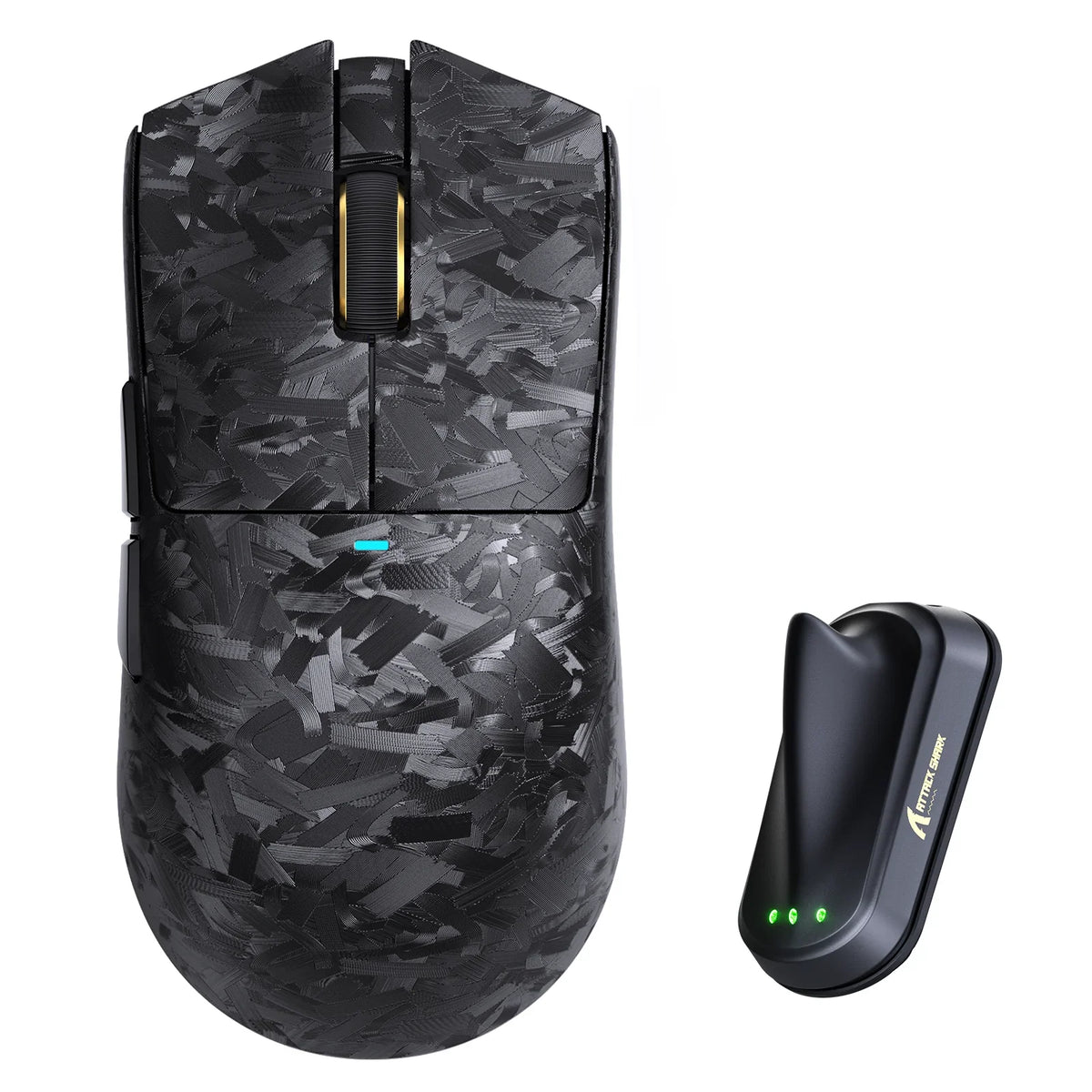
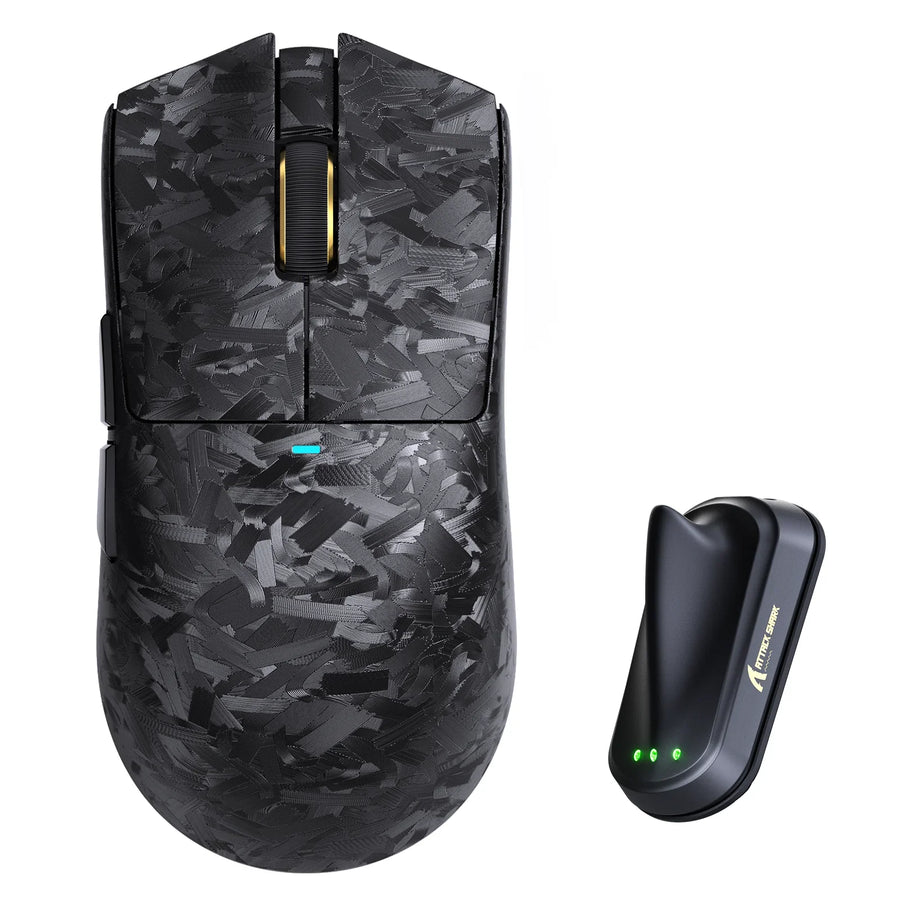
Our X11 ULTRA gaming mouse is a concrete example of how this works in practice, pairing a carbon-fiber composite shell with a listed weight of 63g±3g. That weight comes from the complete build, including the sensor and internal components, not from the carbon fiber alone, so we don't attribute the finished weight or any responsiveness outcome to the material by itself. If a carbon-fiber mouse or keyboard you're considering shows a verified structural location and a finished weight that matches your priorities, it's a reasonable pick; if those facts aren't available or don't clear your bar, compare a magnesium or ABS alternative on the same five checks before deciding.
FAQs
Can a carbon-fiber keyboard plate matter even if the keyboard isn't lighter?
Yes, a stiffer plate can alter localized flex and key bottom-out sensation independently of total keyboard weight, because the plate directly supports the mechanical switches during keystrokes. However, because direct construction evidence varies across keyboard designs, treat this as a conditional possibility rather than a guaranteed result for every board. Always verify the specific plate thickness, mounting method, and structural design before paying a premium.
Does a carbon-fiber shell automatically make a mouse feel faster in games?
No, a carbon-fiber shell does not alter tracking latency, click response, or sensor precision on its own. A lighter structural shell can lower movement inertia so the mouse accelerates and stops with less physical hand effort, but actual in-game responsiveness remains governed by sensor quality, polling rate, firmware tuning, and overall ergonomic fit.
How do I tell if a carbon-fiber gaming mouse is real composite or just cosmetic?
Check the product specifications for explicit mentions of structural composite layup, molded carbon parts, or structural reinforcement rather than a carbon-print wrap or cosmetic finish. Real structural carbon fiber should be tied to a verified overall weight figure and designated chassis locations, whereas purely decorative treatments add appearance without changing flex resistance or saving mass.